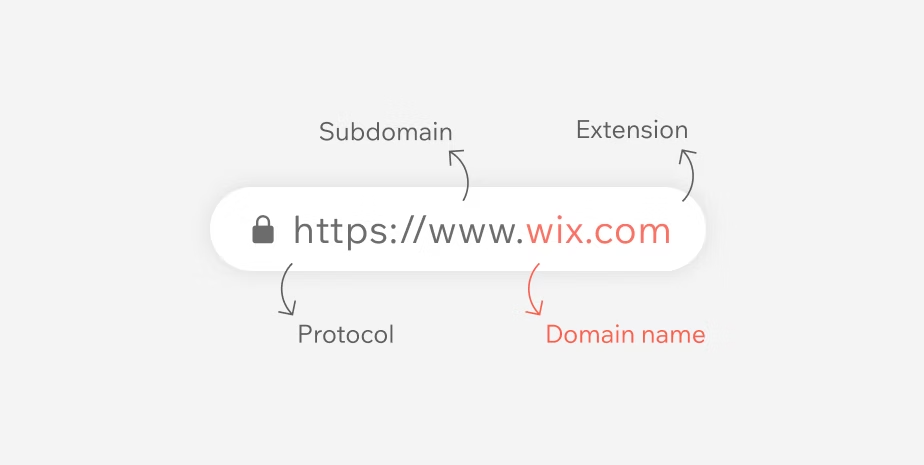

For decades, the .com extension has dominated the internet. Since the early days of the web, businesses, entrepreneurs, and organizations have viewed a .com domain as the gold standard for establishing an online presence. In many cases, owning a short and memorable .com address was considered essential for building credibility and attracting visitors.
However, the internet has changed dramatically. The number of websites has grown into the hundreds of millions, making many desirable .com names unavailable. At the same time, new technologies, changing user behavior, and the rise of artificial intelligence are reshaping how people discover and interact with online content.
As a result, domain extensions are evolving beyond the traditional .com model. Today, businesses have access to hundreds of new domain extensions, creating opportunities to build stronger brands and more specialized online identities. Understanding the future of domain extensions can help businesses make smarter decisions as the web continues to evolve.
The Dominance of .com
The .com extension was originally intended for commercial organizations, but it quickly became the most widely recognized domain extension in the world.
Several factors contributed to its popularity:
- Early internet adoption
- Strong brand recognition
- User familiarity
- Global acceptance
- Perceived credibility
For many years, consumers automatically assumed that a company’s website ended with .com.
Even today, .com remains the most registered and trusted domain extension worldwide.
However, as internet usage expanded, competition for desirable domain names increased significantly.
The Growing Demand for Alternatives
One challenge facing businesses is the limited availability of quality .com domains.
Many short, memorable, and brandable names were registered years ago. New businesses often struggle to find suitable .com options without paying high prices on the secondary domain market.
This demand for alternatives led to the expansion of the domain name system.
Organizations and businesses can now choose from hundreds of domain extensions, including:
- .tech
- .store
- .online
- .app
- .blog
- .shop
- .ai
- .io
- .xyz
These newer options provide greater flexibility for branding and creativity.
The Rise of Industry-Specific Extensions
One of the most significant developments in the domain industry is the growth of niche extensions.
Instead of using a generic .com address, businesses can now choose extensions that reflect their industry or purpose.
Examples include:
- .tech for technology companies
- .store for e-commerce businesses
- .blog for content creators
- .design for creative professionals
- .agency for service providers
These specialized extensions help visitors immediately understand the nature of a website.
They can also strengthen branding by creating more meaningful and memorable web addresses.
Why Branding Is Becoming More Important
In the past, businesses often prioritized exact-match domain names that contained keywords related to their products or services.
Today, branding has become far more important than keyword-focused domains.
Search engines now prioritize:
- Content quality
- User experience
- Expertise
- Authority
- Trustworthiness
As a result, businesses are increasingly choosing domain names that support brand identity rather than simply targeting search terms.
A memorable brand can thrive regardless of whether it uses .com, .io, .ai, or another extension.
The ability to create a distinctive identity is becoming more valuable than owning a keyword-rich domain.
The Impact of Artificial Intelligence
Artificial intelligence is transforming how users find information online.
AI-powered search assistants can provide direct answers, recommendations, and summaries without requiring users to type website addresses manually.
As search becomes more conversational, users are focusing less on domain extensions and more on trusted brands.
This shift may reduce the historical advantage that .com domains once enjoyed.
AI systems are primarily concerned with:
- Content relevance
- Source authority
- User trust
- Information quality
A well-established brand using a newer domain extension can compete effectively if it consistently provides valuable content.
The Growing Popularity of .AI Domains
One of the most notable trends in recent years has been the rapid growth of .ai domains.
Originally assigned as the country-code extension for Anguilla, .ai has become closely associated with artificial intelligence companies.
Many startups, software developers, and AI platforms now use .ai domains because they instantly communicate their focus on artificial intelligence.
Examples of AI-related businesses increasingly feature .ai addresses as part of their branding strategy.
This trend demonstrates how domain extensions can evolve beyond their original purpose and become valuable branding assets.
The Role of New Extensions in Startup Culture
Technology startups have embraced alternative domain extensions more quickly than traditional businesses.
Popular choices include:
- .io
- .ai
- .co
- .xyz
These extensions often appeal to startups because:
- Desired names are more available
- Branding opportunities are greater
- Registration costs can be lower
- Modern audiences are more accepting of alternatives
As younger internet users become more familiar with these extensions, the dominance of .com may gradually decrease.
User Trust Still Matters
Despite the growth of alternative extensions, trust remains a critical factor.
Many users still associate .com domains with established businesses.
For this reason, organizations should carefully evaluate how their chosen extension aligns with audience expectations.
Factors to consider include:
- Industry norms
- Geographic markets
- Customer demographics
- Brand positioning
A financial services company may benefit from a highly professional and familiar extension, while a technology startup may find greater value in a modern alternative.
The best choice depends on the specific goals of the business.
Domain Extensions and SEO
One common misconception is that certain domain extensions automatically improve search rankings.
In reality, search engines generally treat most generic domain extensions equally.
Success depends far more on:
- Content quality
- Website performance
- Backlink profile
- User experience
- Technical optimization
A website using .xyz or .tech can rank just as well as a .com website if it provides valuable content and strong user experiences.
Businesses should choose domain extensions based on branding and strategic considerations rather than SEO myths.
What the Future May Look Like
The future of domain extensions is likely to be shaped by several trends:
Increased Brand Flexibility
Businesses will continue exploring unique extensions that support memorable branding.
Greater Acceptance of Alternatives
Consumers are becoming increasingly comfortable with domain extensions beyond .com.
AI-Driven Discovery
As AI-powered search grows, visibility will depend more on authority and trust than domain extension choice.
Specialized Online Identities
Industry-specific extensions may help businesses communicate expertise more effectively.
Continued Growth of New Extensions
The internet will likely see further expansion of domain options tailored to emerging technologies and industries.
Conclusion
The future of domain extensions extends far beyond the traditional .com model. While .com remains a trusted and widely recognized option, businesses today have access to a growing range of alternatives that support branding, creativity, and specialization.
As artificial intelligence, conversational search, and digital innovation continue to reshape the web, the value of a domain extension will increasingly depend on how well it supports a brand rather than its historical popularity. Trust, authority, content quality, and user experience are becoming more important than the extension itself.
Businesses that choose domain names strategically and focus on building strong brands will be well-positioned to succeed in the evolving digital landscape. The next generation of the web is not defined by a single extension—it is defined by the ability to create meaningful, memorable, and trusted online experiences regardless of what comes after the dot.