
The internet has transformed the way people communicate, shop, learn, and do business. Behind every website, online application, and digital service is a web hosting infrastructure that makes it possible for users to access content anytime and from anywhere in the world. While websites have become faster and more interactive over the years, web hosting has also undergone a remarkable evolution.
In the early days of the internet, hosting a website was a simple process that often involved a single physical server shared among multiple users. Today, businesses have access to intelligent cloud infrastructure powered by artificial intelligence (AI), automation, edge computing, and scalable cloud technologies.
Modern web hosting is no longer just about storing website files. It has become a critical component of digital transformation, influencing website performance, cybersecurity, scalability, customer experience, and business continuity.
This article explores the evolution of web hosting, from traditional shared servers to today’s intelligent cloud infrastructure, and examines how future innovations will continue shaping the online world.
The Early Days of Web Hosting
When the commercial internet began gaining popularity in the 1990s, websites were relatively simple.
Most websites consisted of:
- Static HTML pages
- Basic images
- Simple contact forms
- Limited multimedia
Because websites required minimal computing resources, hosting multiple websites on a single server was an efficient and affordable solution.
This approach became known as shared hosting.
Shared Hosting: Making Websites Affordable
Shared hosting remains one of the most popular entry-level hosting solutions.
In this model, many websites share:
- Server hardware
- Processing power
- Memory
- Storage
- Network bandwidth
Advantages
- Low cost
- Easy setup
- Beginner-friendly
- Minimal technical knowledge required
Limitations
As websites grew larger and traffic increased, shared hosting revealed several challenges:
- Limited performance
- Shared resources
- Less customization
- Reduced scalability
- Potential security concerns
Although shared hosting continues serving millions of websites, growing businesses often require more advanced solutions.
The Rise of Virtual Private Servers (VPS)
Virtualization technology introduced a major improvement in web hosting.
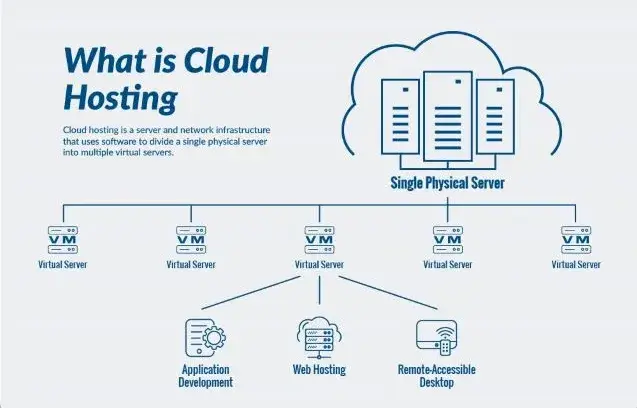
Instead of sharing all server resources equally, Virtual Private Servers (VPS) divide a physical server into multiple isolated environments.
Each VPS receives dedicated resources such as:
- CPU
- RAM
- Storage
- Operating system
This provides greater control and more consistent performance than shared hosting.
Businesses benefit from:
- Better security
- Greater flexibility
- Higher reliability
- Improved customization
VPS hosting became a popular choice for websites experiencing steady growth.
Dedicated Servers for Maximum Performance
As organizations expanded, some required complete control over their hosting environments.
Dedicated servers provide exclusive access to an entire physical machine.
Benefits include:
- Maximum performance
- Full administrative control
- Custom software installation
- High security
- Greater resource availability
Dedicated hosting is commonly used by:
- Large e-commerce platforms
- Enterprise applications
- Financial institutions
- High-traffic websites
However, dedicated servers often require significant technical expertise and higher operating costs.
The Cloud Revolution
Cloud computing transformed the hosting industry by replacing dependence on individual physical servers with distributed infrastructure.
Cloud hosting connects multiple servers that work together as a unified system.
Unlike traditional hosting, cloud infrastructure allows websites to access computing resources from an entire network rather than a single machine.
Key benefits include:
- High availability
- Automatic scaling
- Better fault tolerance
- Flexible pricing
- Global accessibility
Cloud hosting has become the preferred solution for businesses seeking reliability and long-term growth.
Scalability Changes Everything
One of the biggest advantages of cloud hosting is scalability.
Traditional servers often require manual upgrades when traffic increases.
Cloud infrastructure can automatically allocate additional resources during periods of high demand.
Examples include:
- Holiday shopping seasons
- Product launches
- Viral marketing campaigns
- Live streaming events
Automatic scaling helps businesses maintain performance without overinvesting in unused hardware.
Artificial Intelligence Is Transforming Hosting
Artificial intelligence is rapidly becoming an essential part of modern hosting infrastructure.
AI helps automate many routine management tasks, including:
- Server monitoring
- Performance optimization
- Traffic forecasting
- Resource allocation
- Security analysis
- Fault detection
Instead of reacting to problems after they occur, AI enables hosting platforms to predict and prevent many issues before they affect users.
Intelligent Resource Management
Future cloud platforms increasingly rely on intelligent infrastructure management.
AI systems continuously monitor:
- CPU usage
- Memory consumption
- Disk performance
- Network activity
- User traffic
Based on real-time analysis, hosting environments can automatically optimize resource allocation.
This improves efficiency while reducing operational costs.
Edge Computing Expands Hosting Capabilities
Cloud hosting and edge computing complement each other.
Edge computing processes information closer to users rather than relying entirely on centralized data centers.
Advantages include:
- Lower latency
- Faster page loading
- Better video streaming
- Improved gaming performance
- Real-time application support
Businesses serving global audiences benefit from delivering content through geographically distributed edge servers.
Security Becomes a Core Feature
Cybersecurity has become one of the most important considerations in web hosting.
Modern hosting providers include advanced protection such as:
- Firewalls
- DDoS mitigation
- Malware detection
- Data encryption
- Multi-factor authentication
- Automated backups
Artificial intelligence further strengthens security by identifying unusual behavior and detecting potential attacks before they escalate.
Strong security protects both businesses and their customers.
Automation Simplifies Website Management
Automation is reducing the complexity of website administration.
Modern hosting platforms can automatically perform tasks such as:
- Software updates
- Backup scheduling
- Security scanning
- Performance monitoring
- SSL certificate renewal
Automation reduces manual workloads while improving consistency and reliability.
This allows businesses to focus more on growth than on server maintenance.
Sustainability in Modern Hosting
Environmental sustainability is becoming an important priority for hosting providers.
Data centers consume significant amounts of electricity.
Many cloud providers now invest in:
- Renewable energy
- Energy-efficient hardware
- Advanced cooling technologies
- Carbon reduction initiatives
Businesses increasingly consider sustainability when selecting technology partners.
Green hosting benefits both organizations and the environment.
Supporting Artificial Intelligence Applications
AI-powered applications require significant computing resources.
Cloud infrastructure provides scalable environments capable of supporting:
- Machine learning
- Natural language processing
- Image recognition
- Data analytics
- Intelligent automation
Flexible cloud resources enable organizations to experiment with AI without investing heavily in physical infrastructure.
Multi-Cloud and Hybrid Cloud Strategies
Many organizations now combine multiple hosting environments.
Examples include:
Multi-Cloud
Using services from several cloud providers.
Hybrid Cloud
Combining private infrastructure with public cloud services.
Benefits include:
- Improved resilience
- Better disaster recovery
- Greater flexibility
- Reduced vendor dependence
Future hosting strategies will likely become even more diversified.
Website Performance Remains Essential
No matter how advanced hosting technology becomes, website performance remains a top priority.
Businesses should continue optimizing:
- Loading speed
- Mobile responsiveness
- Image optimization
- Content delivery
- Server response time
Fast websites improve customer satisfaction and support better search engine visibility.
Preparing for the Future
Businesses can prepare for evolving hosting technologies by:
- Choosing scalable cloud solutions.
- Prioritizing cybersecurity.
- Monitoring AI developments.
- Optimizing website performance.
- Maintaining regular backups.
- Investing in reliable infrastructure.
- Staying informed about industry trends.
Organizations that embrace innovation will be better positioned for long-term success.
The Future of Intelligent Hosting
The next generation of hosting platforms is expected to include:
- Self-healing infrastructure
- Predictive maintenance
- AI-driven optimization
- Autonomous security systems
- Advanced edge computing
- Intelligent energy management
Hosting providers will increasingly function as technology partners rather than simple server providers.
This evolution enables businesses to focus on innovation while infrastructure becomes smarter and more automated.
Conclusion
The evolution of web hosting reflects the broader transformation of the internet itself. What began with simple shared servers has grown into sophisticated cloud-based ecosystems capable of supporting global businesses, real-time applications, and artificial intelligence.
Today’s intelligent cloud infrastructure offers far more than storage and bandwidth. It delivers scalability, automation, advanced security, high availability, and the flexibility required to meet the demands of modern digital experiences. As technologies such as AI, edge computing, and sustainable data centers continue to advance, web hosting will become even more intelligent and efficient.
For businesses of every size, understanding this evolution is essential. Investing in modern hosting solutions, prioritizing website performance, and staying informed about emerging technologies will help organizations remain competitive in an increasingly connected world. The future of web hosting is not only about keeping websites online—it is about creating a reliable, secure, and adaptable foundation for the next generation of digital innovation.