
The internet continues to evolve at an extraordinary pace. Over the past few decades, businesses have moved from simple websites to sophisticated digital platforms powered by artificial intelligence (AI), cloud computing, and personalized user experiences. As online competition grows, choosing the right domain name has become more important than ever.
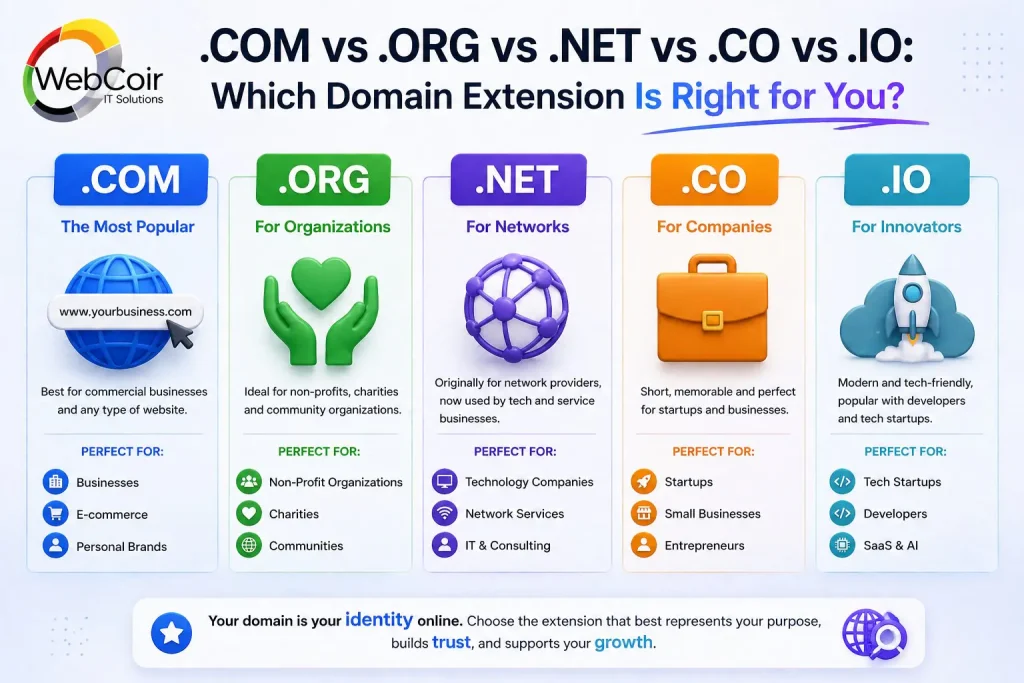
For many years, .com has been the most recognized and trusted domain extension on the internet. However, the introduction of hundreds of new generic Top-Level Domains (gTLDs) has significantly expanded the options available to businesses, entrepreneurs, and organizations.
Today, companies can choose domain extensions that better reflect their industries, locations, or services. As technology continues advancing and digital branding becomes increasingly competitive, the next generation of domain extensions is expected to play a much larger role in shaping online identities.
This article explores the future of domain extensions, the trends driving their growth, and what businesses should expect in the coming years.
Understanding Domain Extensions
A domain extension, also known as a Top-Level Domain (TLD), is the suffix that appears after the domain name.
Examples include:
- .com
- .org
- .net
- .edu
- .gov
Over time, many additional extensions have been introduced, including:
- .tech
- .store
- .online
- .blog
- .app
- .shop
- .agency
- .design
- .cloud
- .io
Each extension helps define part of a website’s identity and can communicate its purpose or industry.
Why .com Became the Global Standard
Since the early days of the commercial internet, .com has remained the most widely recognized domain extension.
Businesses have traditionally preferred .com because it offers:
- Strong consumer trust
- Global recognition
- Easy memorability
- Professional credibility
Many of the world’s largest companies continue using .com domains because customers naturally associate them with established businesses.
Although .com remains highly valuable, increasing demand has made many desirable domain names unavailable.
The Rise of New gTLDs
To provide more choices, the internet introduced hundreds of new generic Top-Level Domains (gTLDs).
These newer extensions allow businesses to create more descriptive web addresses.
Examples include:
- companyname.tech
- companyname.store
- companyname.design
- companyname.agency
- companyname.blog
These extensions can make websites more relevant to specific industries while offering greater branding flexibility.
As internet adoption continues growing, businesses are becoming more open to alternatives beyond .com.
Industry-Specific Branding
Modern consumers appreciate brands with clear identities.
Industry-specific domain extensions help businesses immediately communicate their focus.
Examples include:
Technology Companies
- .tech
- .cloud
- .io
Online Retailers
- .store
- .shop
Creative Agencies
- .design
- .studio
Educational Platforms
- .academy
- .education
These extensions provide additional branding opportunities while making domain names easier to understand.
Artificial Intelligence Will Influence Domain Selection
Artificial intelligence is transforming digital marketing and branding.
AI-powered tools can analyze:
- Customer behavior
- Industry trends
- Search patterns
- Brand recognition
- Domain availability
Businesses increasingly use AI to generate creative domain name ideas that align with their goals.
Future AI systems may recommend domain extensions based on:
- Target audience
- Geographic location
- Business category
- Brand personality
- Marketing objectives
Rather than replacing human creativity, AI serves as a valuable decision-support tool.
The Growing Importance of Brand Identity
Modern branding focuses less on keywords and more on memorable names.
Businesses increasingly choose domain names that are:
- Short
- Easy to pronounce
- Simple to spell
- Brandable
- Unique
The domain extension also contributes to brand identity.
For example, a software company may find .tech more descriptive than a generic extension, while an online retailer may benefit from .store.
Choosing the right extension helps reinforce a company’s overall brand image.
Voice Search Is Changing Domain Strategy
Voice assistants continue becoming more common in homes, smartphones, and vehicles.
Consumers increasingly ask conversational questions such as:
- Find a nearby hotel.
- Recommend a web design company.
- Where can I buy running shoes?
Because voice assistants often recommend only a limited number of results, memorable brands become increasingly important.
Easy-to-pronounce domain names combined with relevant domain extensions can improve brand recognition during voice interactions.
Search Engines Focus on Quality, Not Extension Alone
One common misconception is that newer domain extensions automatically improve search engine rankings.
In reality, search engines primarily evaluate factors such as:
- Content quality
- User experience
- Website performance
- Expertise
- Trustworthiness
- Mobile usability
A .com domain does not automatically rank higher than a .tech or .store domain.
Businesses should prioritize creating valuable content regardless of which extension they choose.
Security Will Continue to Matter
Cybersecurity remains one of the biggest concerns for website owners.
Regardless of the domain extension, businesses should protect their websites using:
- SSL certificates
- Two-factor authentication
- Domain privacy protection
- DNS security
- Regular software updates
- Strong passwords
Future domain management platforms will likely integrate AI-powered security tools capable of detecting threats before they affect websites.
Geographic and Local Branding
Country-code Top-Level Domains (ccTLDs) continue playing an important role.
Examples include:
- .us
- .uk
- .ca
- .au
- .de
Businesses serving local markets often use country-specific extensions to build trust among regional audiences.
Future localization technologies may strengthen the importance of geographic domain extensions for businesses targeting specific countries or regions.
Premium Domains Will Remain Valuable
Even with hundreds of new domain extensions available, premium domain names continue attracting strong demand.
Premium domains often share characteristics such as:
- Short length
- Easy spelling
- Brand potential
- High memorability
- Broad commercial appeal
Businesses increasingly view premium domains as long-term investments that strengthen digital branding.
New extensions create additional opportunities, but premium names within those extensions may also become valuable over time.
Sustainability and Digital Growth
As more businesses establish online operations, the number of registered domain names continues increasing.
Future domain management may emphasize:
- Efficient registration systems
- Improved DNS infrastructure
- Better security standards
- Environmentally sustainable data centers
The growth of digital commerce will continue driving demand for new domain registrations across many industries.
Emerging Trends to Watch
Several developments may shape the future of domain extensions.
AI-Powered Branding
Artificial intelligence will simplify domain selection and branding decisions.
More Industry-Specific Extensions
Additional specialized TLDs may be introduced for emerging industries.
Greater International Adoption
Businesses around the world will increasingly embrace alternative domain extensions.
Stronger Security Standards
Domain registries will likely implement more advanced security technologies.
Personalized Digital Experiences
Businesses will choose domain strategies that support personalized customer interactions.
Choosing the Right Domain Extension
When selecting a domain extension, businesses should consider:
- Brand identity
- Target audience
- Industry relevance
- Geographic market
- Long-term growth plans
- Marketing strategy
The best extension is the one that aligns with the company’s overall objectives rather than simply following trends.
Preparing for the Future
Businesses can strengthen their online presence by:
- Registering domain names early.
- Protecting valuable brand names.
- Choosing memorable domains.
- Monitoring emerging TLD opportunities.
- Prioritizing website security.
- Publishing high-quality content.
- Building long-term brand authority.
- Staying informed about internet industry developments.
These practices help organizations remain competitive regardless of how the domain landscape evolves.
Conclusion
The next generation of domain extensions represents an exciting evolution in digital branding. While .com remains one of the most recognized and trusted domain extensions worldwide, businesses now have access to a much broader range of options that can better reflect their industries, services, and brand identities.
Artificial intelligence, voice search, cloud technologies, and changing consumer behavior are influencing how organizations choose domain names. Rather than relying solely on traditional extensions, businesses are increasingly considering specialized TLDs that improve branding and help differentiate them in competitive markets.
Ultimately, the success of a website depends not only on its domain extension but also on the quality of its content, user experience, security, and reputation. Organizations that combine a thoughtful domain strategy with valuable content and strong digital branding will be well positioned for long-term success as the internet continues to evolve.